AI-Powered Expense Tracker — Shipped in Under 60 Days
A founder came to us with a real product to ship and the timeline most founders actually have — weeks, not quarters. We compressed a 6-to-9-month build into under 60 days using AI-accelerated development workflows, without trading away architecture, scope, or polish. 16 feature modules, 50+ API endpoints, 6 AI integrations — live in the App Store and Play Store. Senior team, multiplied output.
A founder's timeline.
A 6-month scope.
The founder came to us with a clear vision and a real launch deadline — the kind every founder lives with. The scope was a complete consumer product: zero-friction onboarding, AI receipt capture, smart categorization, semantic search, budget intelligence, subscription detection, multi-account support, paywall, and tax reporting. No prototype. No scope cuts. Live in the App Store and Play Store in under two months — the kind of velocity most founders are told is impossible.
Zero-Friction
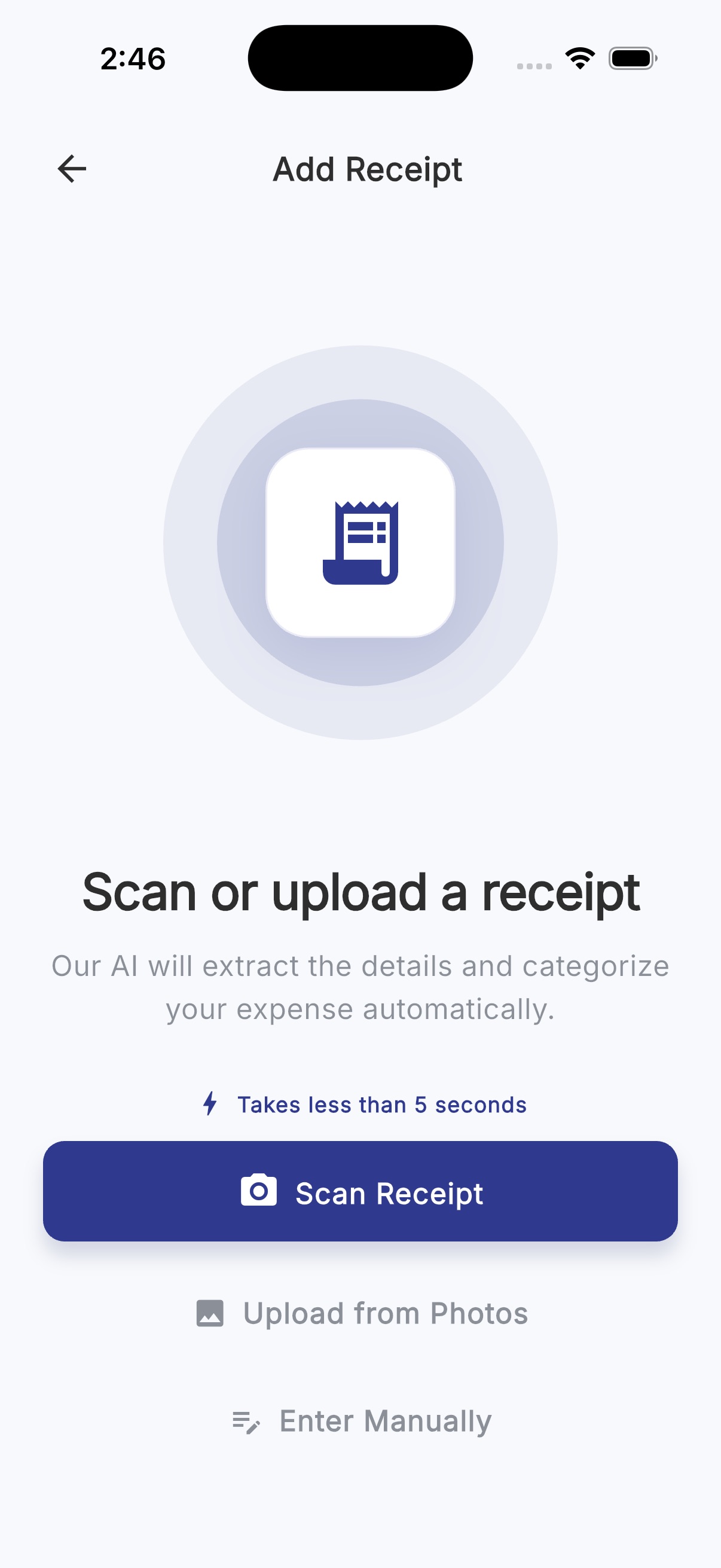
No manual entry, no bank linking, no spreadsheets. Snap a photo and the AI does the rest.
AI-Native
Receipt scanning, smart categorization, spending insights, and budget recommendations powered by LLMs.
Cross-Platform
iOS and Android from a single Flutter codebase. Native performance on both platforms.
Production-Ready
Background jobs, push notifications, subscription billing, multi-account support, and tax reporting.
Shipped Fast
Market window demanded delivery in under 60 days. We compressed a 6-to-9-month project into fewer than 60 days.
Massive Scope
16 feature modules, 50+ API endpoints, 5 background job queues, and multi-model AI pipelines.
AI-first development, end to end.
AI was not just a product feature — it was the backbone of our entire development workflow.
Architecture & Planning
AI-assisted code generation scaffolded our clean architecture — use cases, data access objects, service factories, and route registration — in hours rather than days.
Code Generation at 3-5x Velocity
AI pair-programming handled Zod schema definitions, Drizzle ORM table schemas, Riverpod providers, and API endpoint wiring — refined by senior engineers.
AI Feature Development
Prompt engineering, structured output parsing, and model orchestration iterated rapidly. AI coding assistants helped design prompts and fallback logic in tight feedback loops.
Full-Stack Debugging
AI traced issues across the full stack — from Flutter widget trees to PostgreSQL query plans — reducing mean time to resolution dramatically.
Snap a receipt.
AI does the rest.
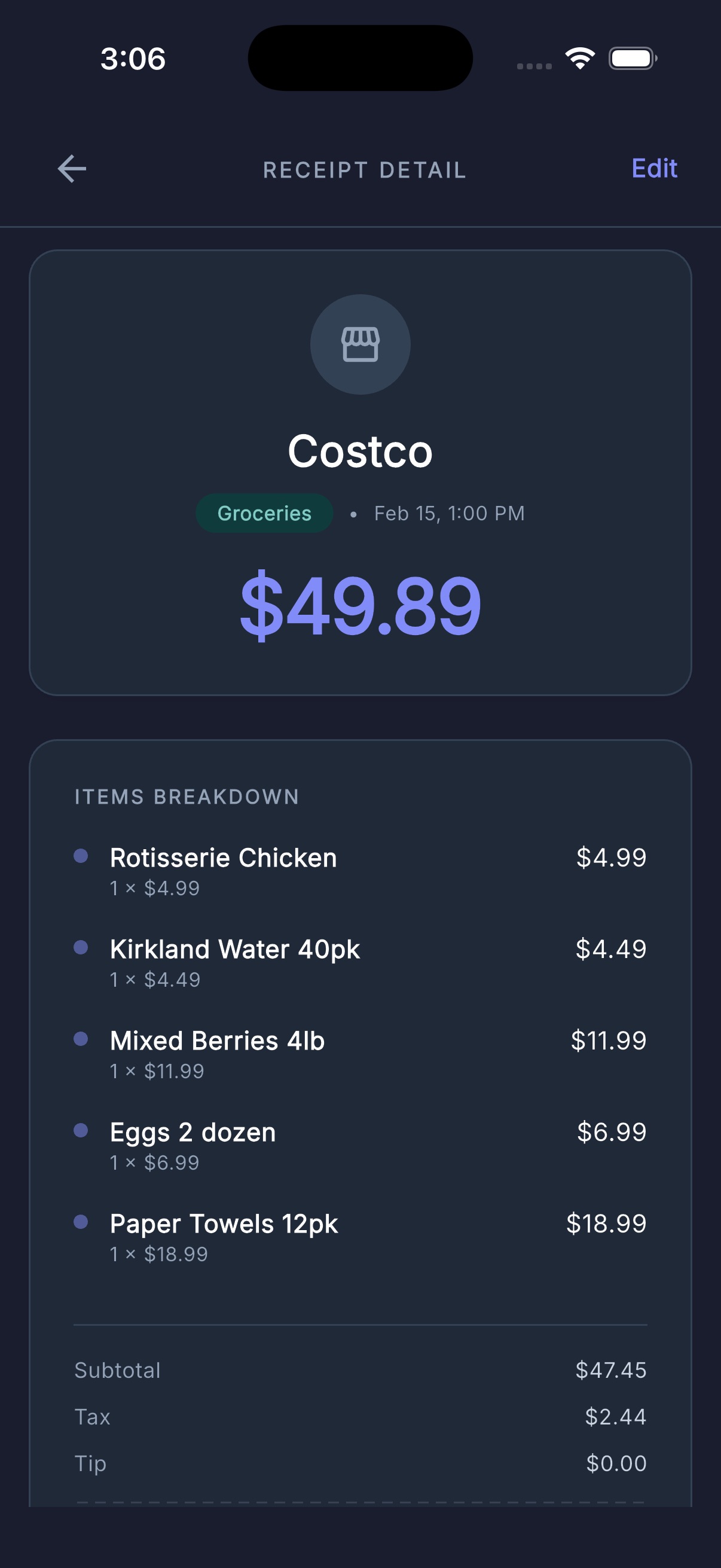
Users photograph a receipt and the system extracts every detail in seconds — merchant name, line items with quantities, tax, tip, payment method, and automatic category assignment.
- check_circle Merchant name and normalized identifier
- check_circle Line items with name, quantity, unit price, and total
- check_circle Subtotal, discounts, tax, tip, and grand total
- check_circle Automatic category and subscription detection
Model: Google Gemini Flash for vision-capable processing via OpenRouter
Spending intelligence,
not just charts.
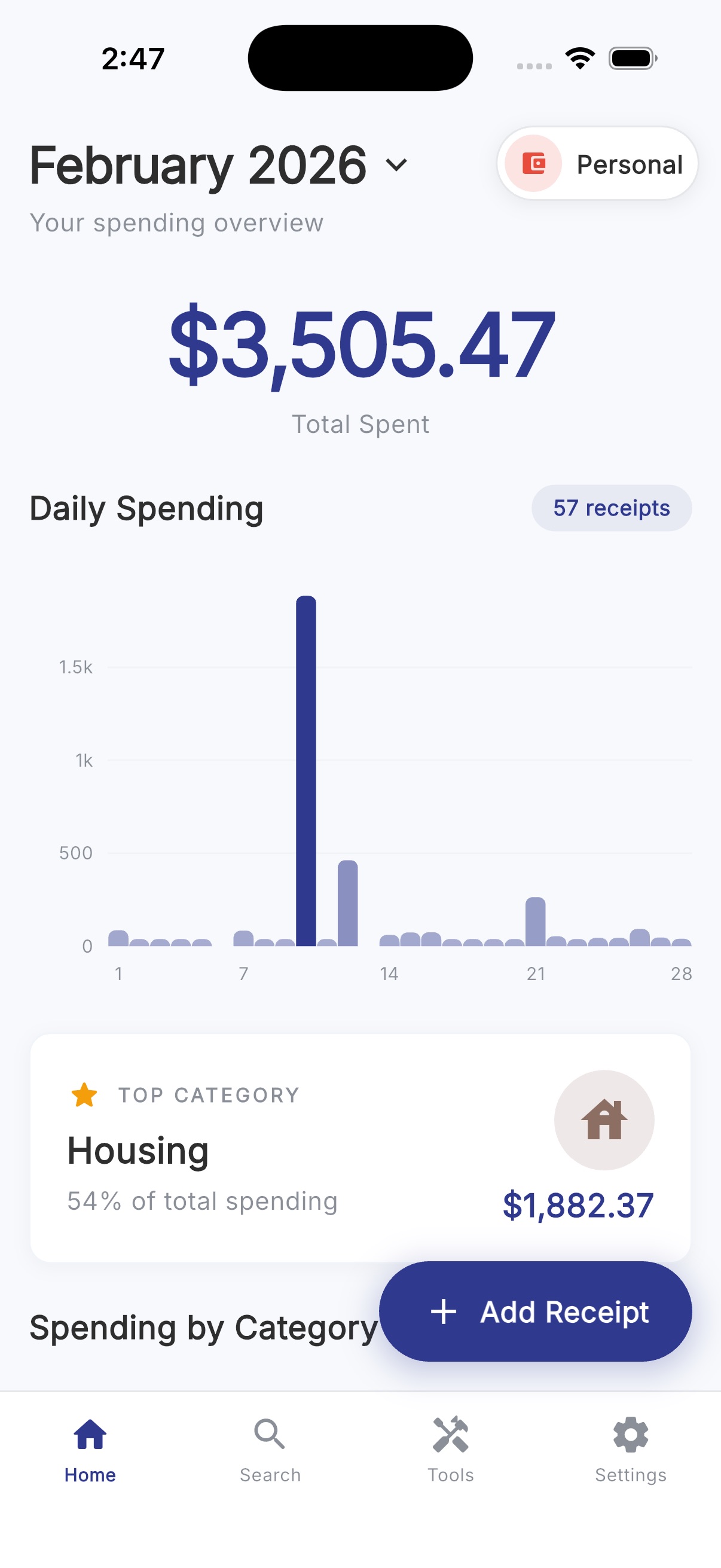
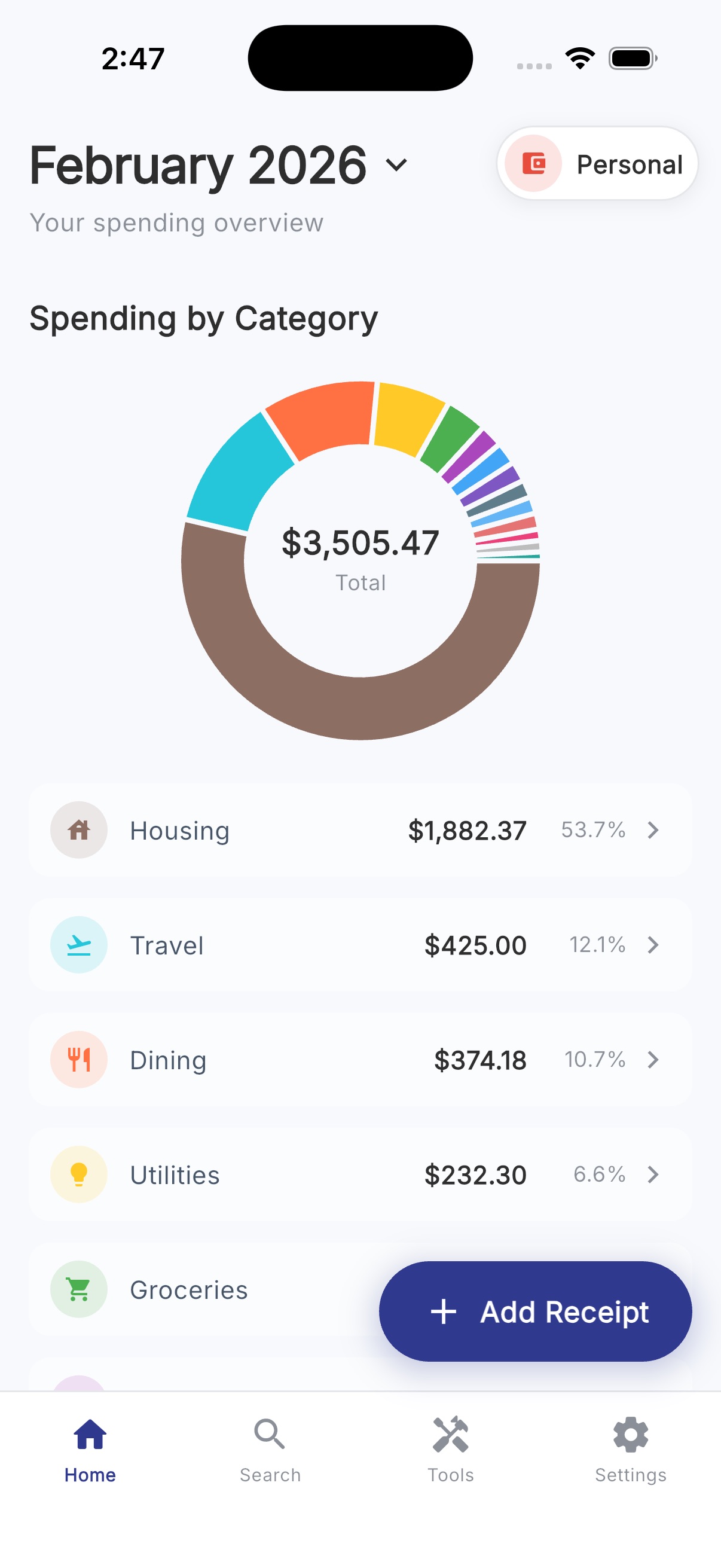
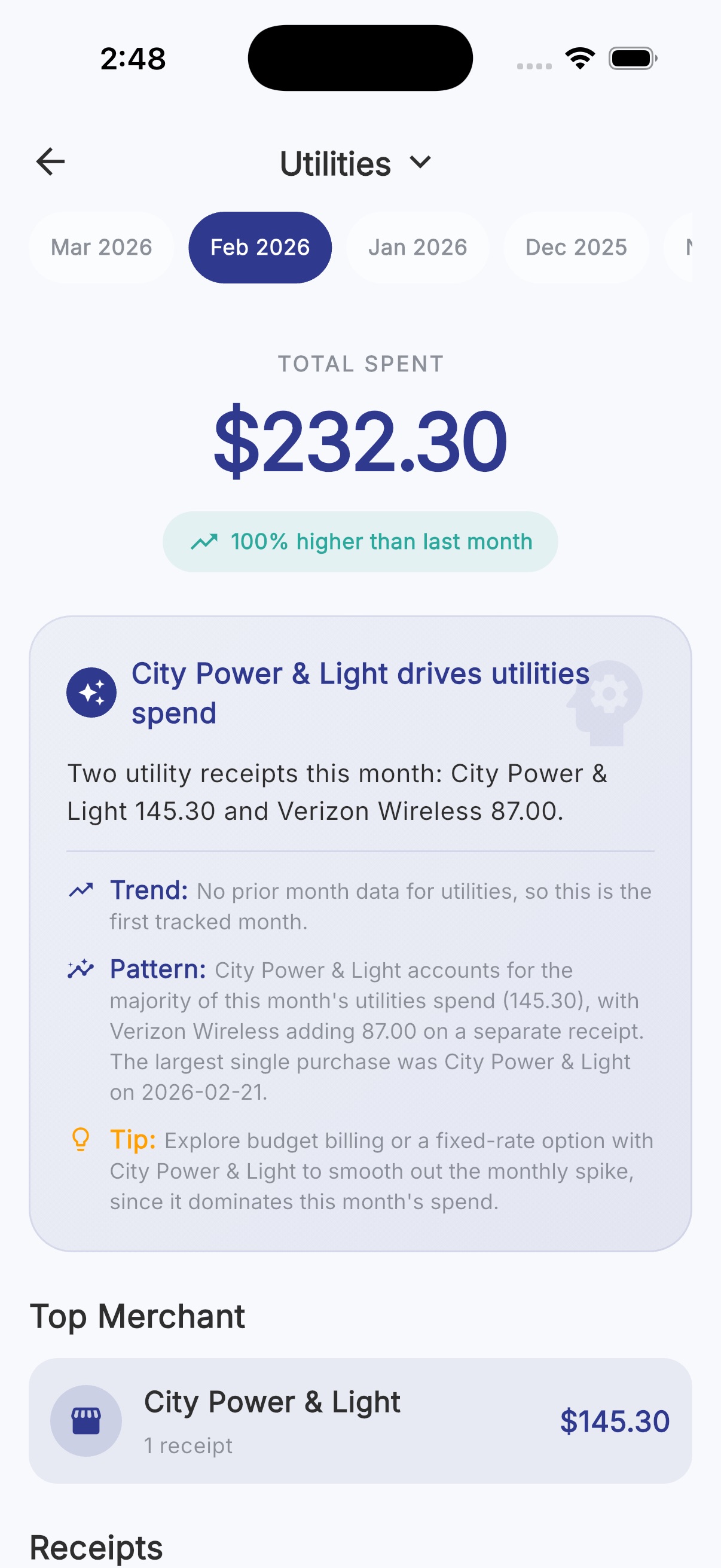
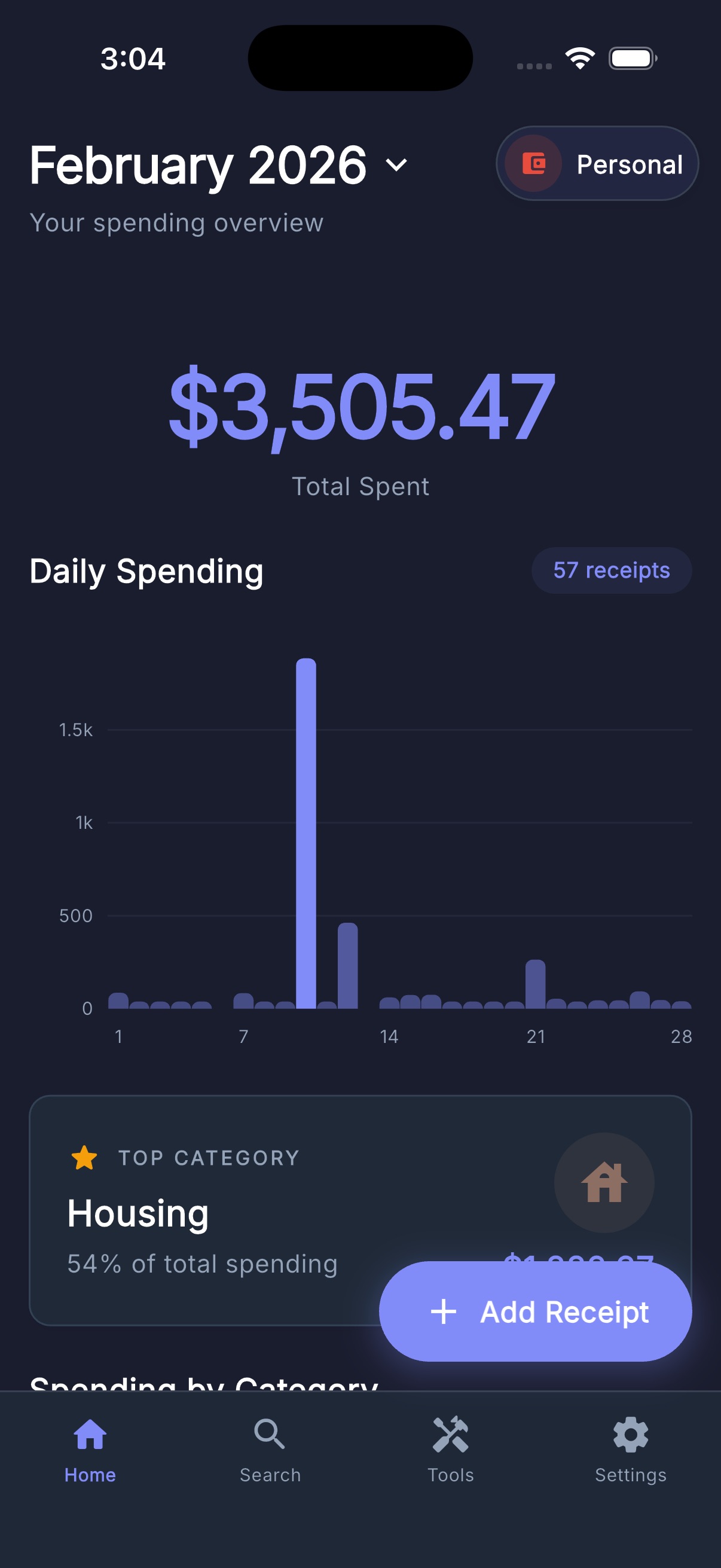
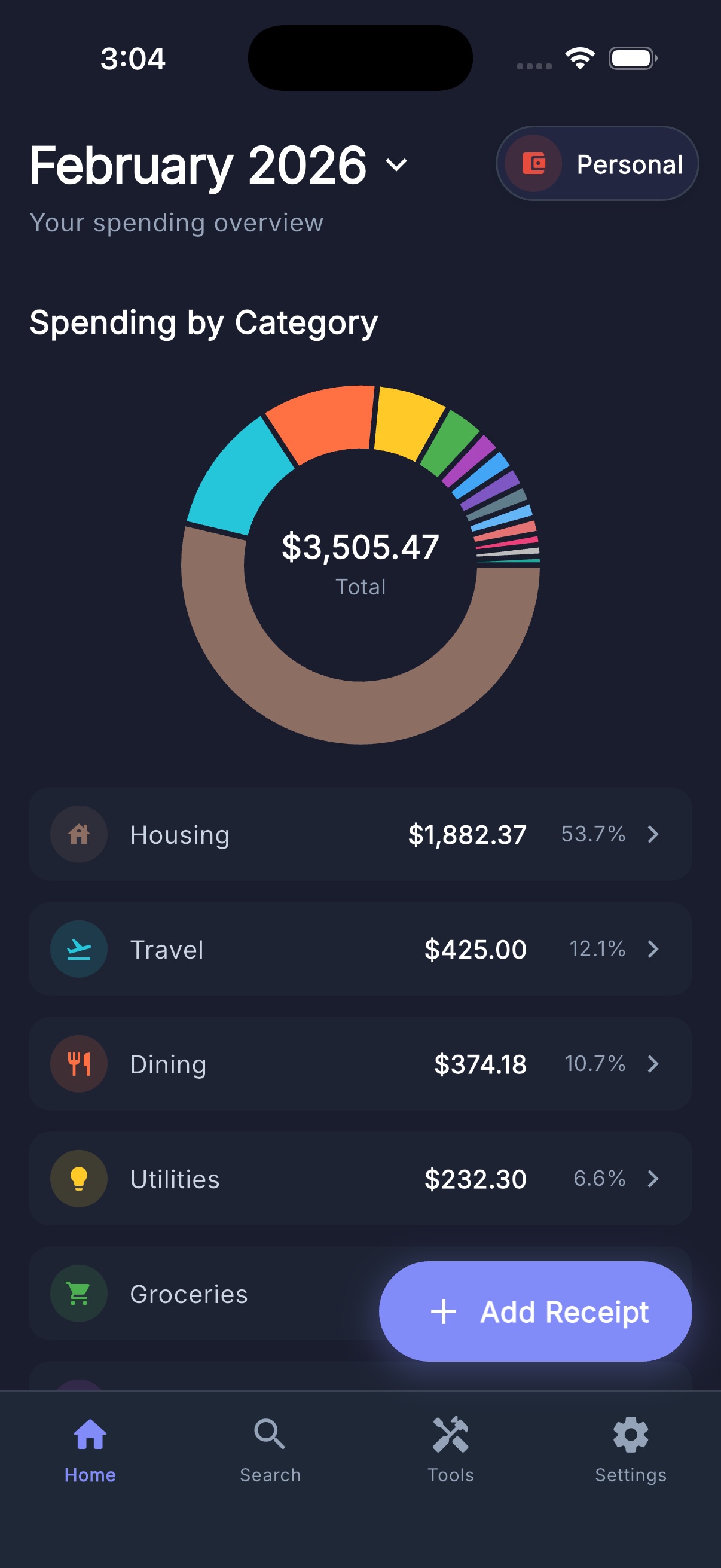
The dashboard goes beyond simple graphs. AI analyzes spending patterns per category, identifies trends, spots anomalies, and delivers actionable tips — like suggesting budget billing to smooth out utility spikes.
- check_circle Real-time spending overview with category breakdowns
- check_circle Merchant-level analysis with month-over-month trends
- check_circle AI-generated trend analysis, pattern detection, and tips
- check_circle Spending anomaly alerts via push notifications
AI woven into every interaction.
From the moment a receipt is scanned to the monthly spending review, AI powers every intelligent feature in the app.
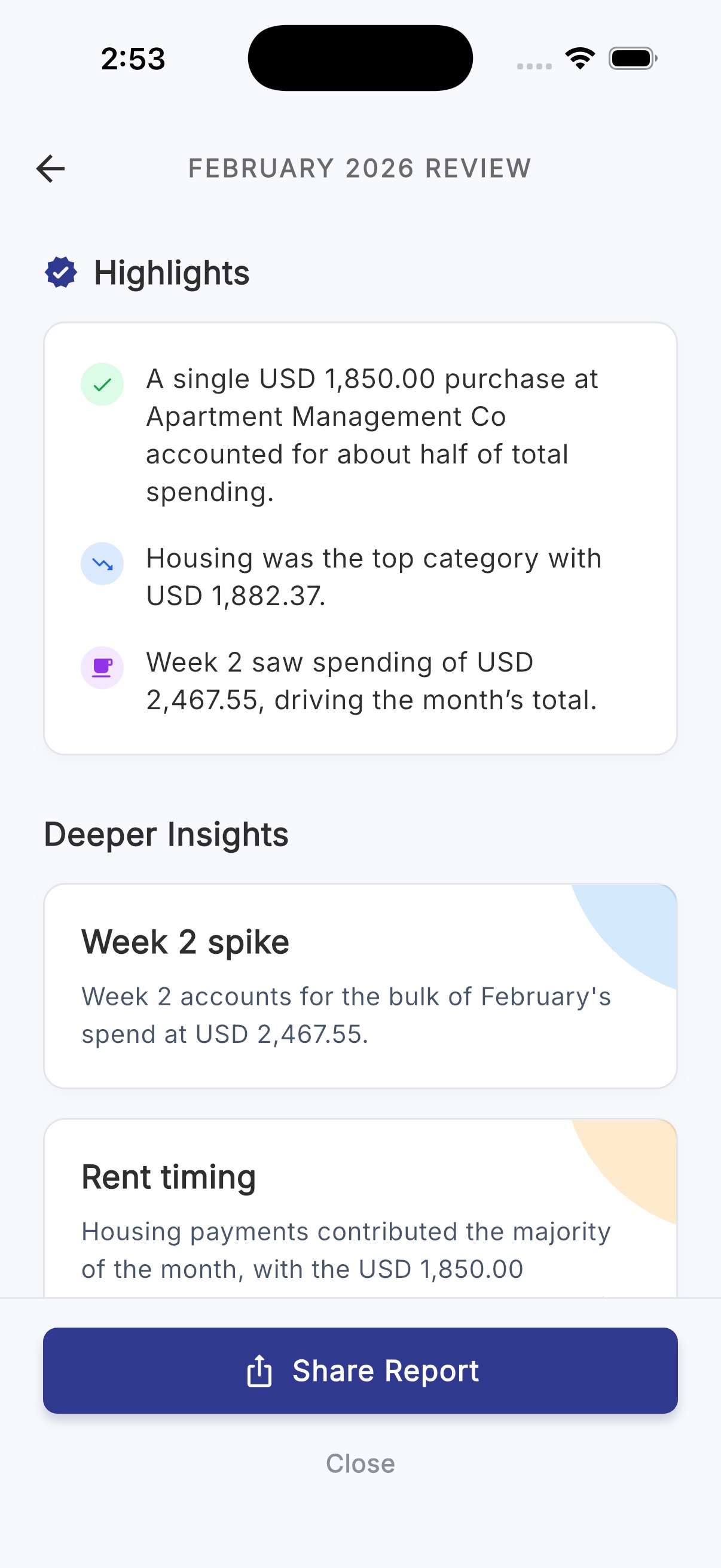
Month-in-Review
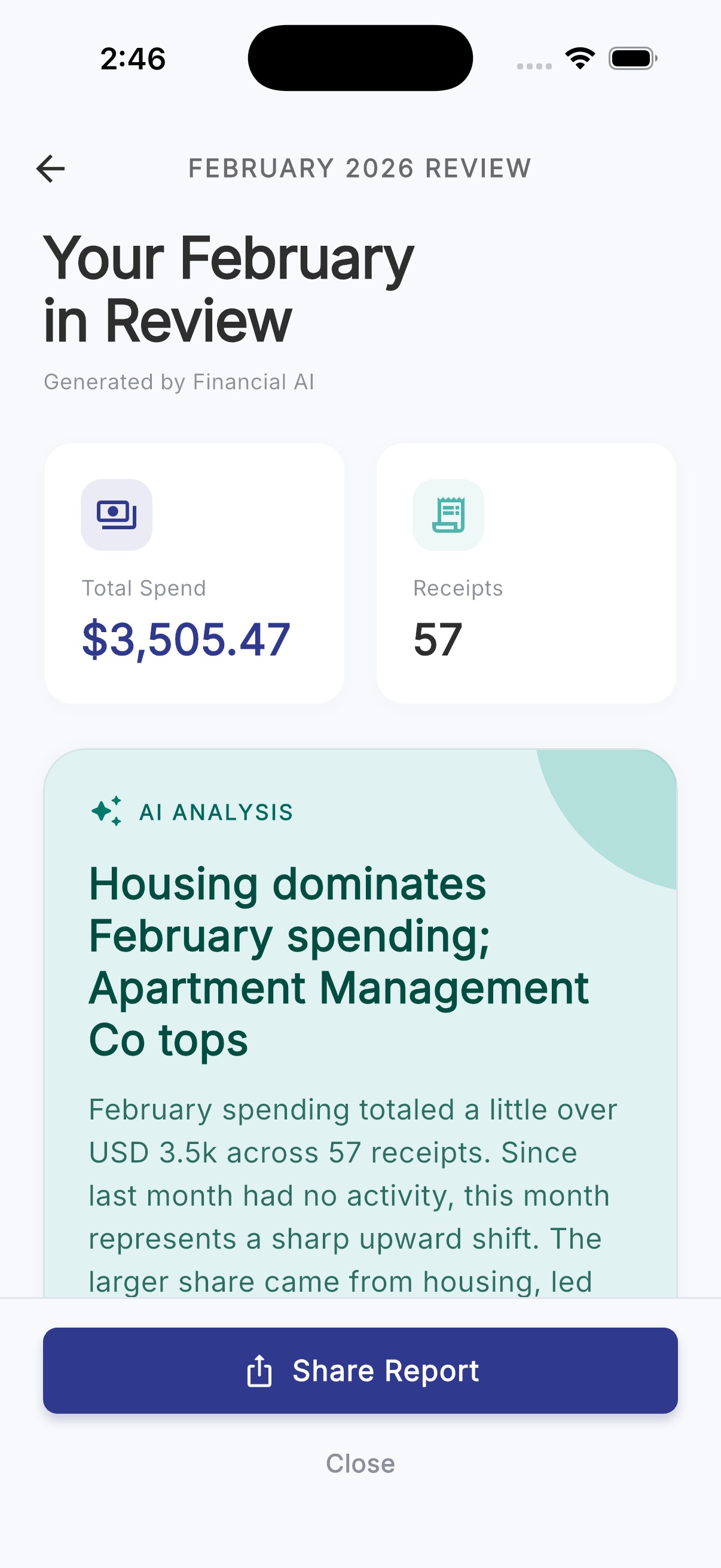
AI generates narrative spending summaries with highlights, anomalies, and actionable suggestions for the coming month.
Semantic Search
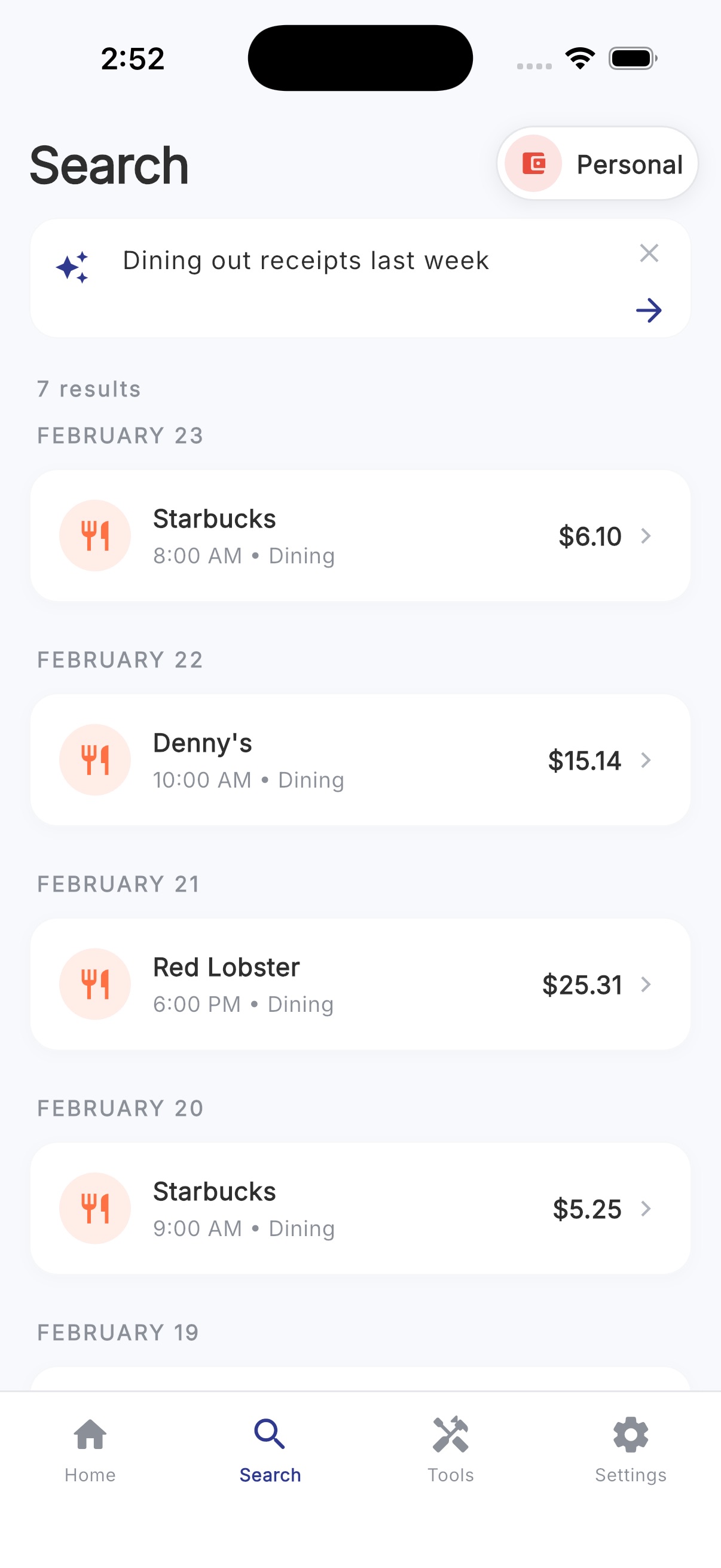
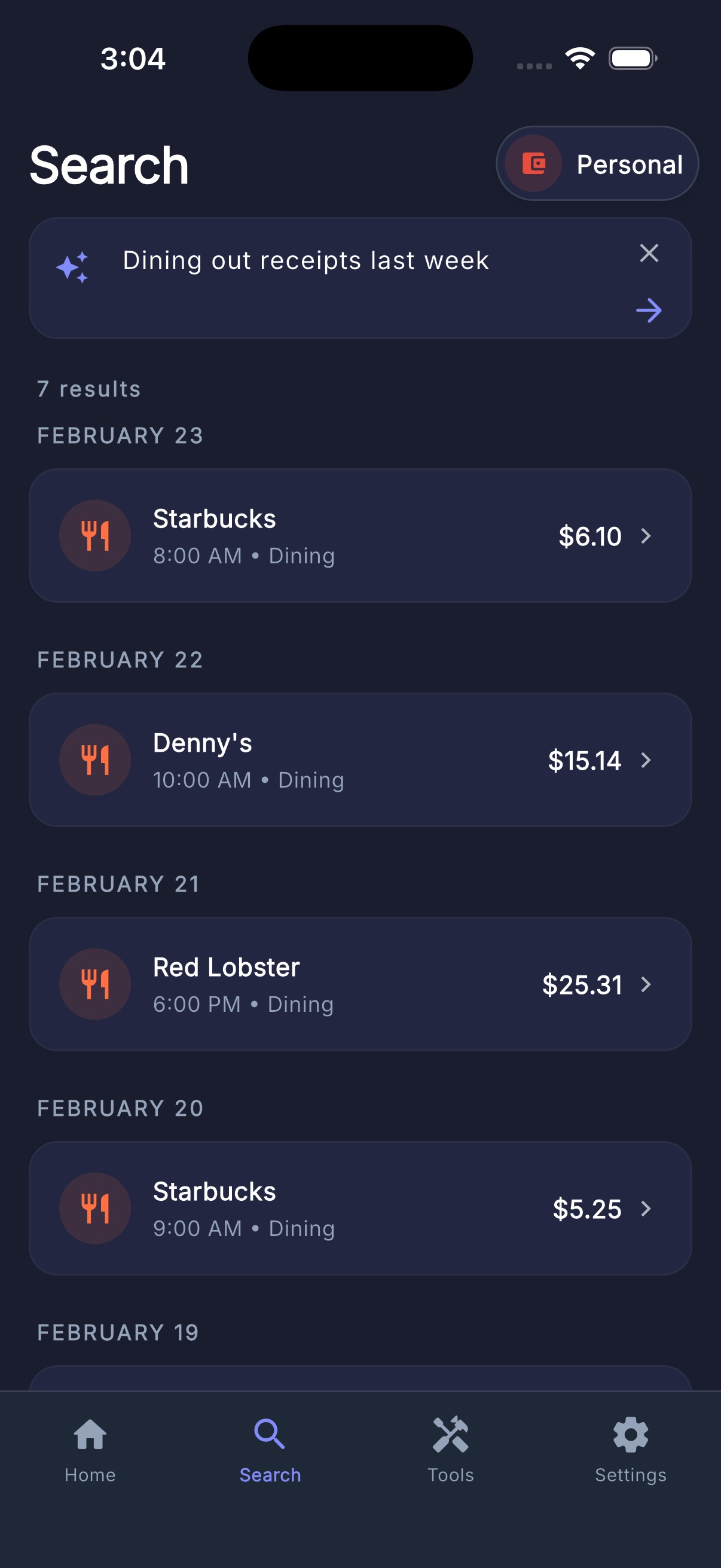
Search receipts with natural language — "dining out receipts last week" — powered by vector embeddings and pgvector similarity search.
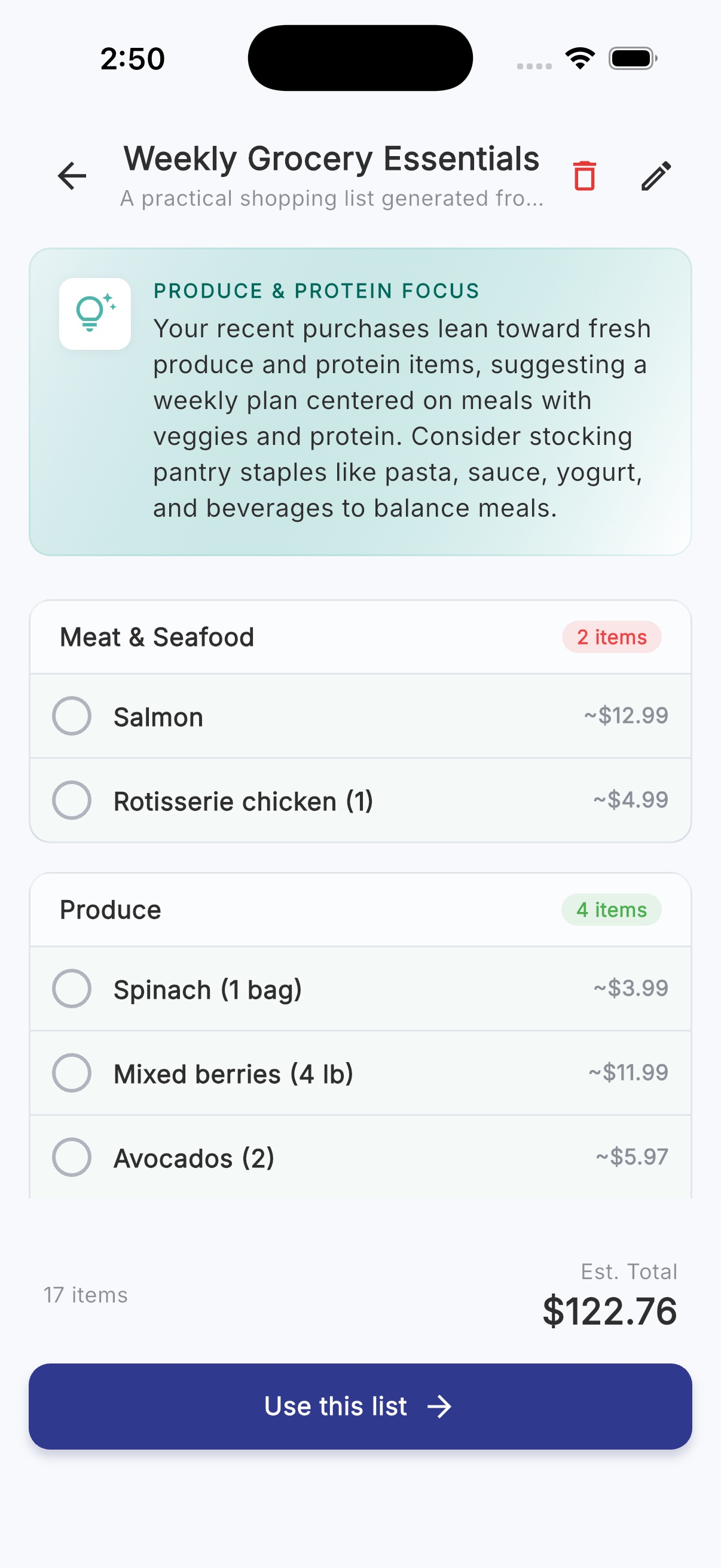
Smart Shopping Lists
AI analyzes purchase frequency and generates contextual shopping lists with estimated costs based on past receipt history.
Budget Recommendations
AI analyzes historical spending patterns per category and suggests monthly budget targets with transparent reasoning.
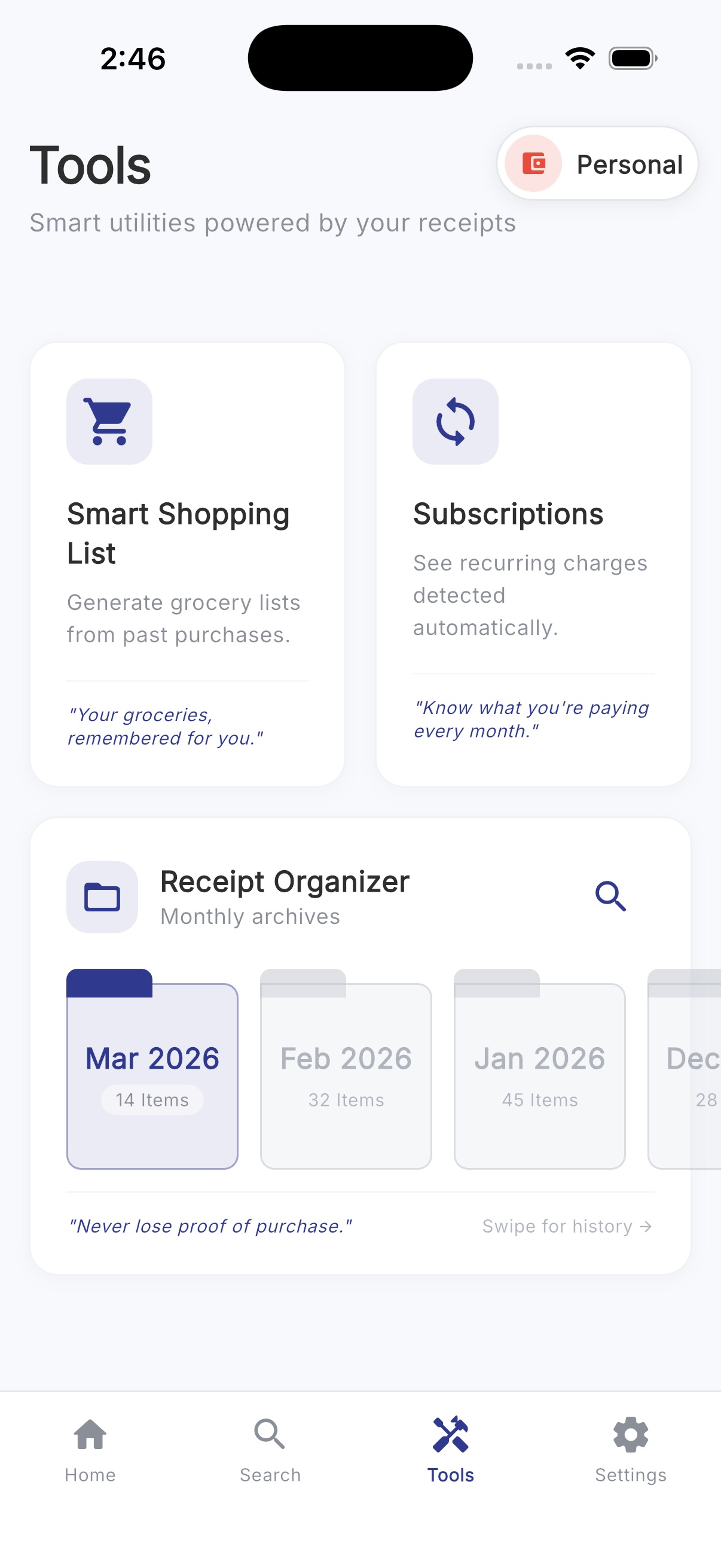
Subscription Detection
Automatic identification of recurring charges with billing cadence detection. Know exactly what you're paying every month.
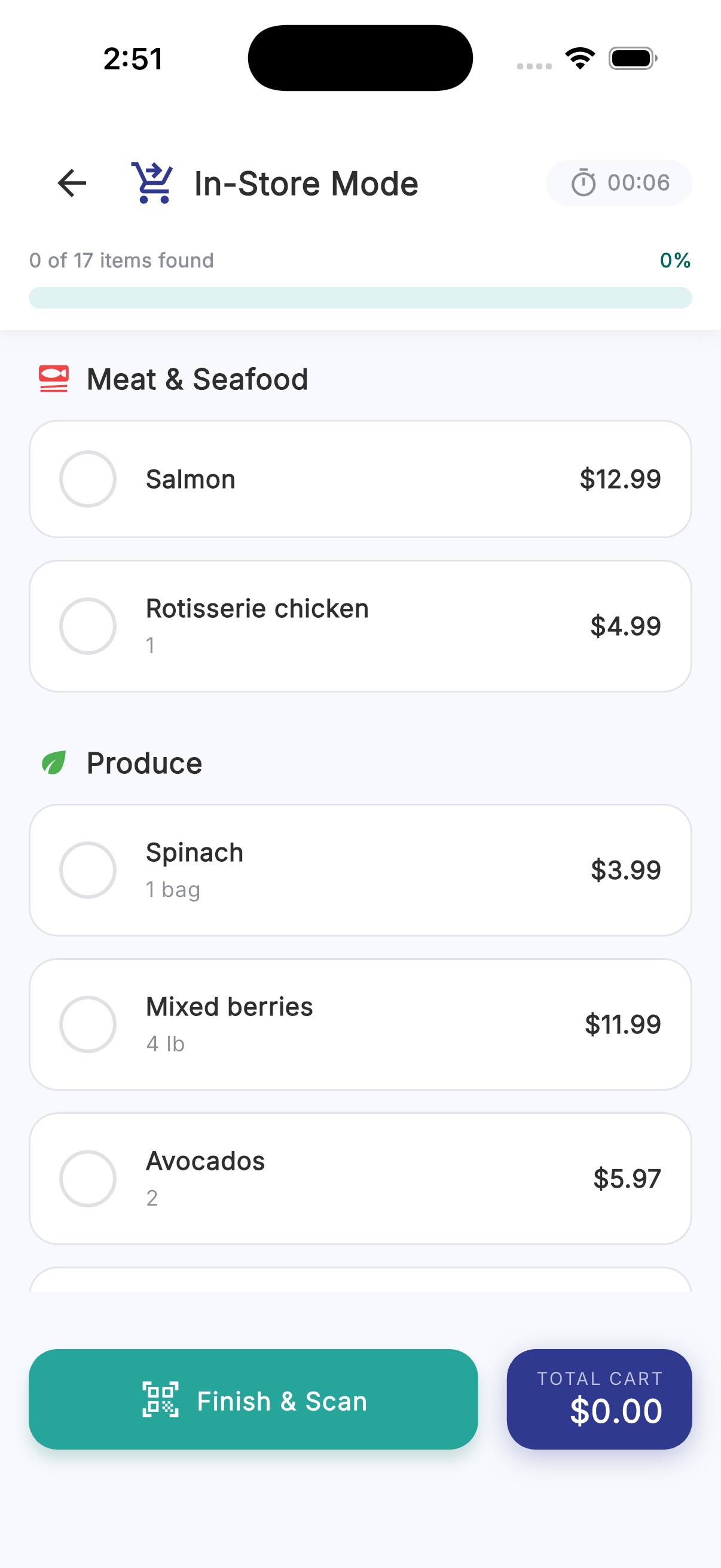
In-Store Mode
Take AI-generated shopping lists into the store. Check items off as you shop with a running cart total and finish by scanning your receipt.
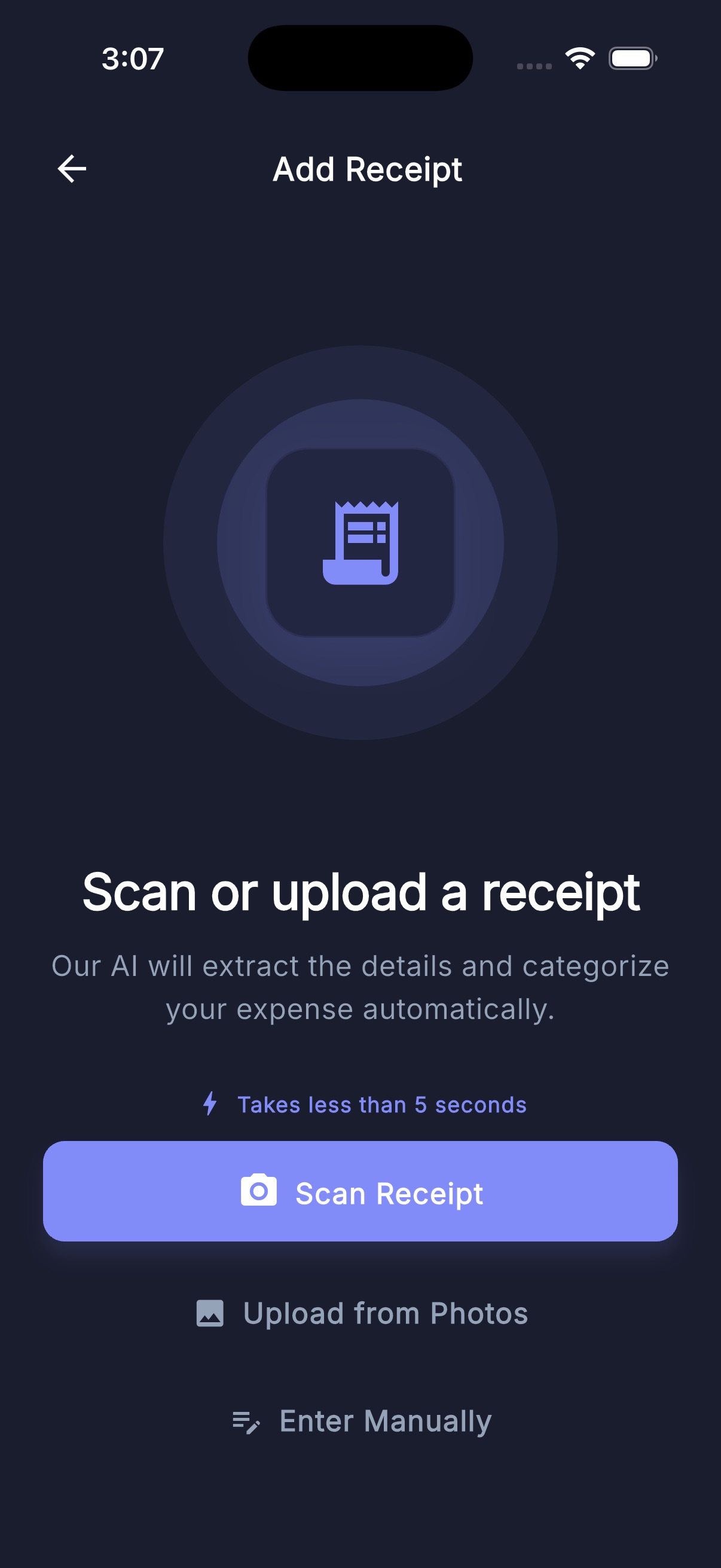
Beautiful in light. Stunning in dark.
Full dark mode support across every screen, designed for comfortable use at any time of day.
Built for scale from day one.
A monorepo with clean architecture, type-safe database access, background job processing, and multi-model AI pipelines.
Mobile App
Flutter & Dart — single codebase for iOS & Android
Backend API
Node.js, TypeScript & Hono — high-performance API
Database & Infra
PostgreSQL with pgvector — vector search built in
Clean Architecture — Every Request Flow
This strict, testable flow allowed multiple developers to work on independent features without merge conflicts.
16 feature modules. One sprint.
Every feature was independently valuable and built on the data foundation of the previous one.
The numbers speak for themselves.
What we took away.
AI as a Development Multiplier
AI coding assistants didn't replace our engineers — they amplified them. Senior developers focused on architecture, edge cases, and product decisions while AI handled boilerplate and pattern replication. The result was senior-level output at 3-5x the velocity.
Clean Architecture Pays Off at Speed
Investing in a strict use-case pattern up front seemed costly for a sprint, but it paid dividends immediately. New features dropped into the architecture like puzzle pieces. Multiple developers worked in parallel without stepping on each other.
Monorepo for Velocity
Sharing Zod schemas, TypeScript types, and conventions across the codebase eliminated an entire class of integration bugs. When a receipt schema changed, both ends of the stack updated together.
Ship AI Features Incrementally
We launched receipt scanning first, then layered on budget suggestions, monthly reviews, and shopping lists. Each AI feature was independently valuable and built on the data foundation of the previous one.
Under 60 days, from concept to production.
Discovery, Strategy & Architecture Design
AI-assisted architecture planning, clean pattern scaffolding, monorepo setup
Core Infrastructure & Auth
PostgreSQL schema, Redis, BullMQ queues, passwordless auth, session management
Feature Development Sprint
16 feature modules, 50+ endpoints, AI receipt scanning, dashboard, budgets, search
AI Pipeline Refinement
Multi-model orchestration, prompt tuning, monthly reviews, smart shopping lists, anomaly detection
Testing, QA & Polish
End-to-end testing, dark mode, RevenueCat integration, NewRelic monitoring setup
Production Deployment & Launch
Docker containerization, CI/CD pipeline, store submission, production monitoring
Project Stats
App Version at Launch
Development Builds
Developer Velocity
Platforms
AI Models
Founder with a real product to ship?
We help founders compress months of development into weeks using AI-accelerated workflows — Flutter, Node.js, AI integrations, clean architecture — without trading away polish or scale. Same senior team, multiplied output. Schedule a free strategy call.