Secure identity & access
Protect accounts, roles, permissions, sessions, secrets, and sensitive data.
00Prototype to Production
Built with Cursor, Claude, Replit, Lovable, Bolt, or a fast internal sprint? We assess what can stay, fix the production risks, and prepare the product for real customers and continued development.
01What changes at production
Real users add identity, changing data, failed requests, payment states, edge cases, operational responsibility, and the expectation that tomorrow's release will not break today's product.
Protect accounts, roles, permissions, sessions, secrets, and sensitive data.
Use sound models, safe migrations, integrity controls, backups, and recovery paths.
Make APIs and third-party services predictable under failure and change.
Automate deployment, validate configuration, and make rollback possible.
Test the workflows that matter most to customers and the business.
Use logs, monitoring, and alerts to understand failures quickly.
Test expensive paths and plan capacity around expected usage.
Give the codebase clear boundaries, documentation, and a dependable workflow.
Production-readiness model
Engineered as one system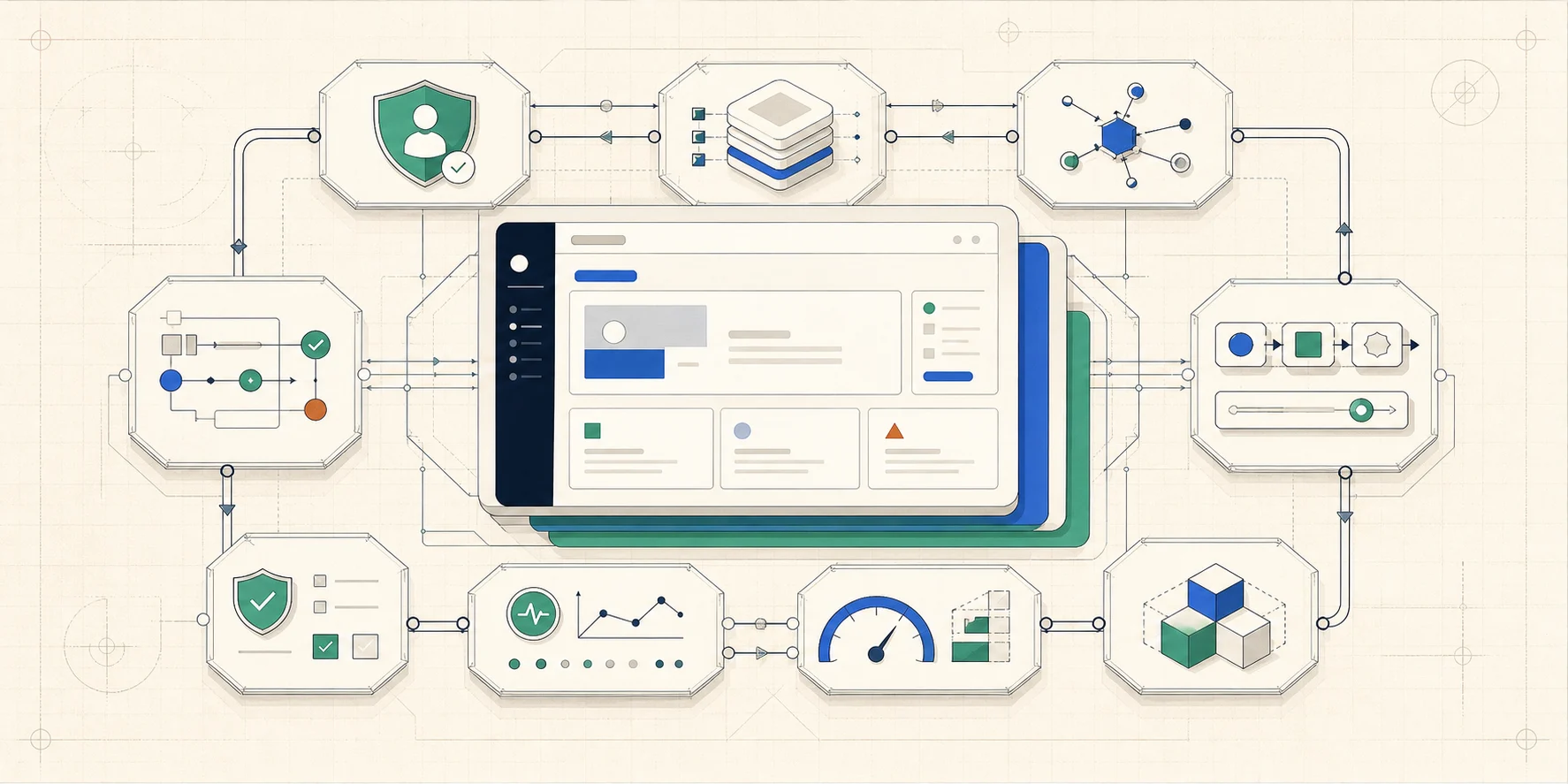
02Decision framework
Your prototype created business value. Our job is to preserve that value while being honest about the parts that put customers, operations, or future development at risk.
Code that has clear behavior, acceptable structure, and no material production risk remains in place.
Focused changes strengthen security, reliability, performance, testing, or clarity without unnecessary disruption.
Only the parts whose architecture or quality prevents security, scale, or continued development are rebuilt.
03Service scope
Exact scope follows the audit. Not every product needs every activity.
Authentication, permissions, secret management, dependency review, data protection, and security remediation.
Testing, error handling, monitoring, deployment automation, backups, and recovery planning.
Architecture, database improvements, performance, API design, integrations, and cloud infrastructure.
Code organization, documentation, development workflow, and technical-debt reduction.
04The journey
Prototype
The prototype proved the idea, shortened the feedback loop, and created momentum.
Momentum createdEngineering
We assess the system, preserve what works, and address production risk in priority order.
Risks reviewedProduction
The product becomes safer to operate, easier to improve, and ready for real customers.
Ready to operate05Process
Understand the product, business priorities, current architecture, and material risks.
Separate launch blockers from improvements that can wait and agree the implementation sequence.
Implement the highest-priority work with visible progress and clear scope decisions.
Validate critical flows, deployment, monitoring, and operational readiness.
Continue product development and architectural oversight where it helps.
06What we need from you
07Fit
Good fit
You have a functioning prototype, want to build a serious business around it, and are willing to address material engineering risks.
Not a good fit
You only want a quick surface change, cannot provide access to the product or code, or expect a guaranteed fixed solution before assessment.
08Questions
No. We assess what is sound, what can be improved with targeted work, and what genuinely blocks security, scale, or continued development. A full rewrite is a conclusion that needs evidence, not a default sales tactic.
Usually. The audit begins by understanding the current architecture, dependencies, constraints, and team capability. Recommendations are based on business and engineering risk rather than a preferred technology list.
Timing depends on product size, access, integrations, and the agreed depth of review. We confirm the scope and expected turnaround before the engagement starts rather than publishing a one-size-fits-all promise.
Yes. The engagement can continue into product development, maintenance, infrastructure, and architectural oversight when that creates value for the team.
Yes. We can implement the roadmap directly, work with an internal engineering team, or prepare findings for another delivery partner. Decision ownership and responsibilities are agreed clearly at the start.
Start with evidence
The Production Readiness Audit gives you prioritized findings and a practical route to launch.